April 21, 2023 | Ordibehesht 1, 1402
Hamedan: Alvand.
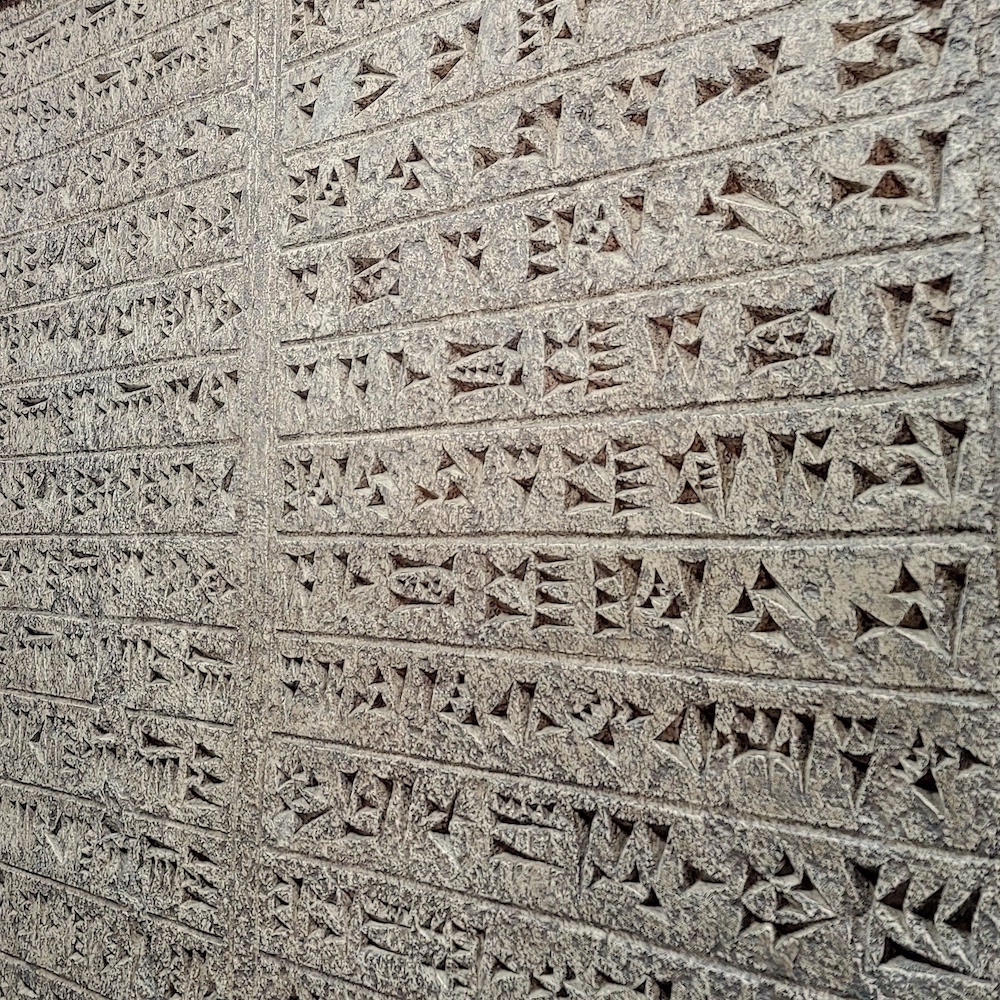
Featured Image: replica of the Ganjnameh cuneiform inscriptions found at Hamadan Archaeological Museum.
Alisadr Cave
We embarked first thing in the morning to Alisadr Cave, the largest underground cave system in the world, with subterranean rivers! It is in the same province, 70 km north of Hamedan city, if you take route 23. What a beautiful landscape! I am embarrassed to report that I “ooo-“ed and “ahhh”-ed plenty of times in between our conversations. Once we arrived, we sighted the Eid holiday crowds and knew we were doomed. We tried anyway, and waited in line just to get the ticket. A person near us in line said that after getting the ticket, you can’t go down to the cave…you must wait to be called in. It’s because the cave can only safely accommodate a limited number of people at a time. It was a tough decision, but felt that we should leave to make better use of our time. The area of Alisadr cave has ample parking and many cafés and services. As we left to return to Hamedan, we entertained the idea of just heading west to Sanandaj in Kurdistan province. But we drove straight to Ganjnameh instead.
Beh Ganjnameh miravim: To Ganjnameh we go.
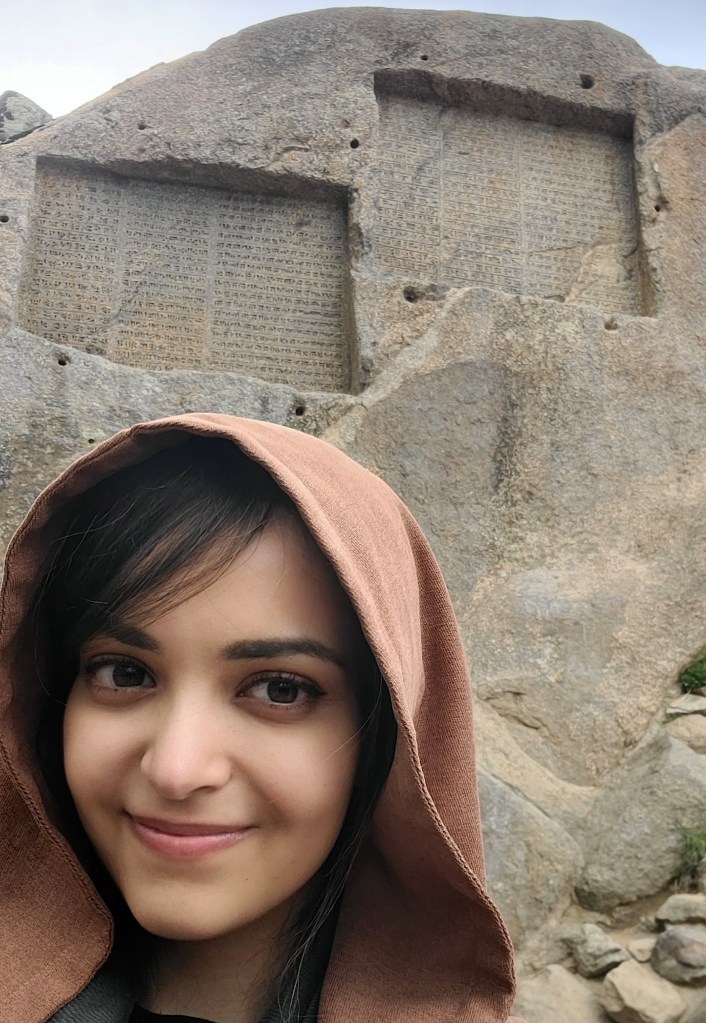
Today’s actual adventure takes us to the high altitudes of Ganjnameh, which translates to “book of treasures”. This is a site in the Alvand highlands known for trilingual cuneiform inscriptions.
We drove through a beautiful landscape and the weather was cold. The air was so clean, especially compared to Tehran. As we got closer to Ganjnameh, we decided to park on the side of the mountain road. It was a 15 to 20 minute walk from where we parked on the road to reach the historic site. The complex was updated and paved to accomodate many visitors. Like Alisadr Cave, there were plenty of tourists as we made our way to the inscriptions.
Achaemenid Era Inscriptions:
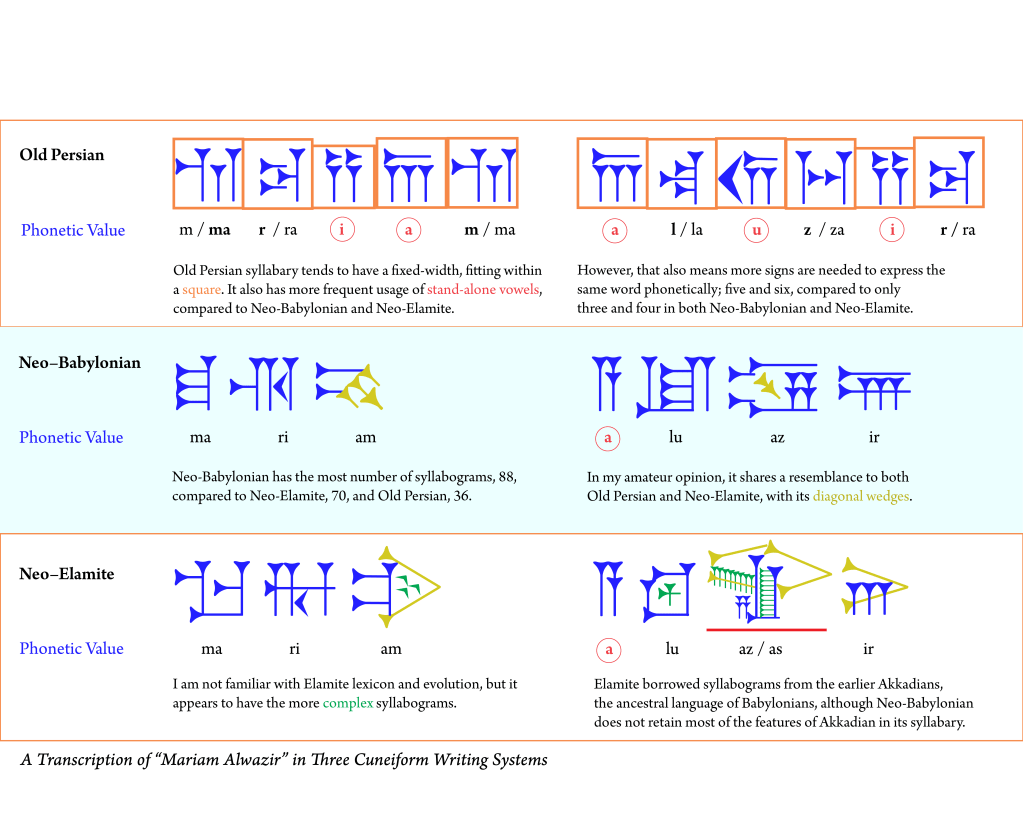
I might die of excitement. This would be my first time seeing REAL cuneiform in its original site, and not a replica, nor in a museum 8000 km away. For about 12 years now, I have gone through waves of obsession with Akkadian cuneiform and extinct languages and writing systems of West Asia. Well, today I would see three cuneiform variations: Old Persian alongside Neo-Babylonian and Neo-Elamite. Keep in mind all three languages use a similar looking script (Cuneiform), but they sound very different. Babylonian is Semitic, Persian is Aryan, and Elamite is a mysterious language isolate with no extant versions, that…I sadly do not know much about yet…You know how Persian, Arabic, and Ottoman Turkish use the same writing system, therefore they look similar, but all 3 are from different language families? Same idea. I marveled at the inscriptions with stars in my eyes. If only we could have gone here in the morning, it would have been more tranquil.
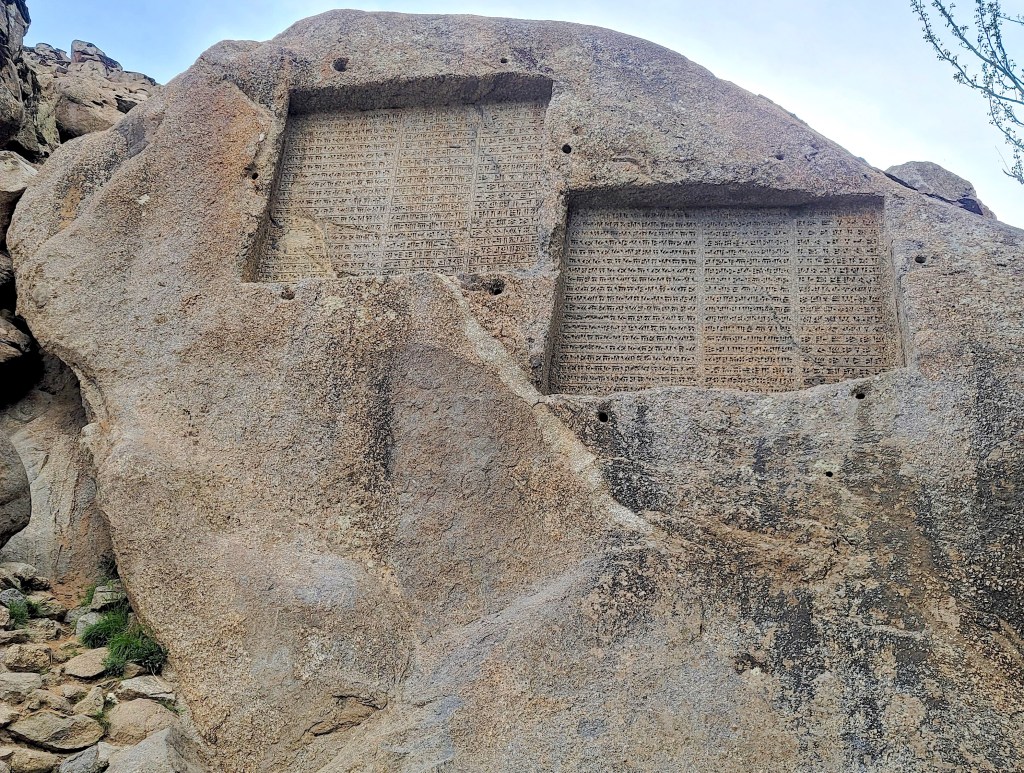
Both inscriptions say the same thing in in three distinct languages, but with slight variations in the names between Darius’ and Xerxes’ inscriptions.
Praise be to Ahuramazda, the greatest of gods! Who created this Earth, who created the heavens, who created happiness for man, who made <king name>, King. One King of many. One Lord of many. I am <king name>, the great king, King of Kings, King of countries, containing all kinds of men, King in this great Earth, far and wide, son of King <father’s name>, an Achaemenian.
The summer capital of the Achaemenians was right here in Hegmatana, but for the rest of the year, they would be in Takhte Jamshid (a.k.a. Persepolis, but I hate using that Hellenistic name). We both shared the same concern about weathering and wind erosion on these ancient inscriptions. Perhaps the ministry of culture could add a glass encasement or something. Some time later, we found a way through the trees to make it to the waterfall. I cannot emphasize how crowded it was, and how many selfies we accidentally ruined during our attempt to get somewhere peaceful — avoid heritage sites during holidays. I was so happy to be there, nonetheless.
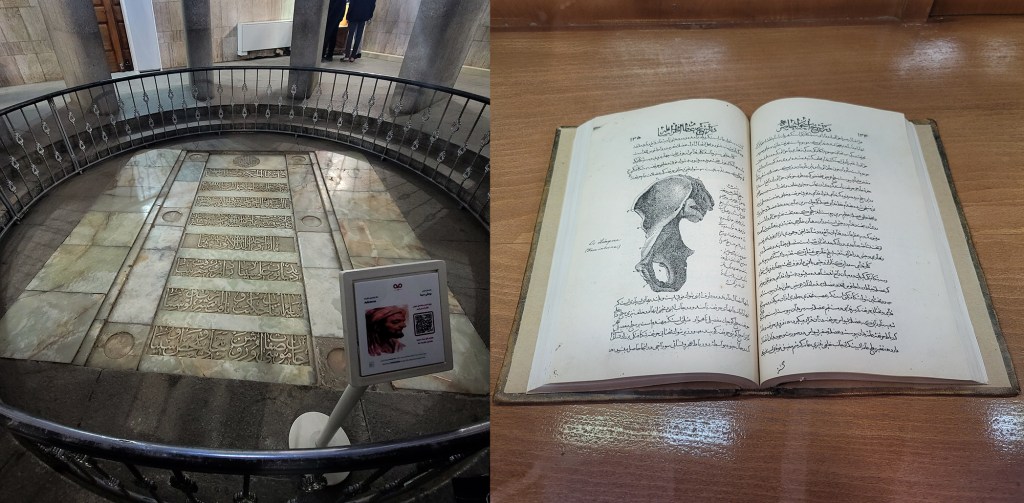
Ibn Sina’s Mausoleum (Avicenna)
We returned to Hamedan just in time to make it to Ibn Sina’s resting place right before closing. There is a monument shaped like a minaret that acts as the landmark to Ibn Sina’s Mausoleum, known in the Latin world as Avicenna. Pay a little fee to go through the gate (I recall it being around 0.5 USD, but maybe I’m wrong), and you enter into the garden. Up the steps and into the mausoleum you’ll be faced with three options: turn right or left, or walk straight ahead to see Ibn Sina’s burial site. Turning right or left is a little more interactive, as they are chambers dedicated to his writing (Ibn Sina Mausoleum Library). You could spend around 45 minutes inside, but if you include the surrounding garden, add another 15 minutes.
Amaday:
I returned to my hostel and my hosts treated me like an old friend. I warmed up to them very quickly, especially with all the gregarious laughter that filled the courtyard! ❤ If only I could speak fluently in their language! One of the hosts could speak English very well, and he even told me that I could take Persian language courses here in Hamedan. I was so tempted to stay, and I pondered that for a little bit…maybe next year 🙂
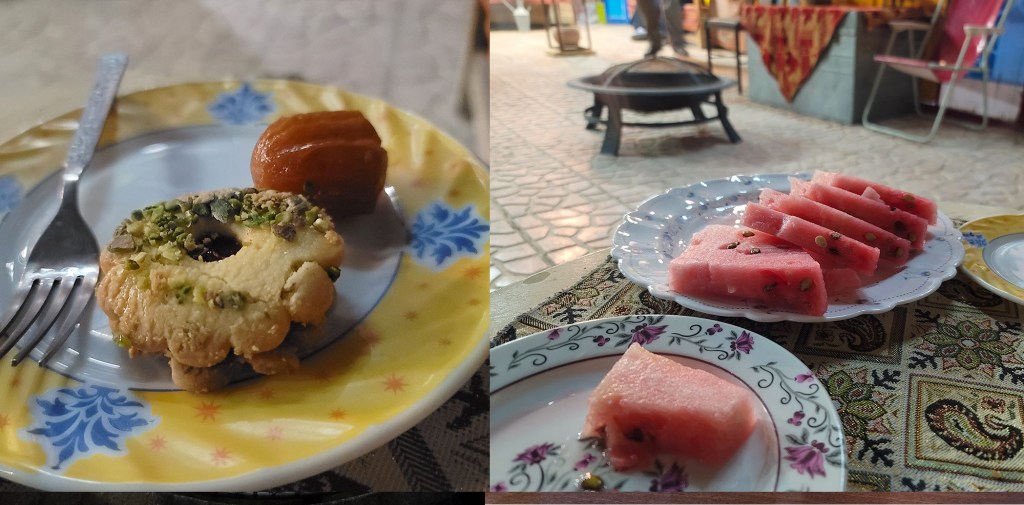
I was given Hamedani cookies (I can’t remember the name right now), but they are pictured below. And of course, hendevooneh. Today was the day I learned the phrase: dast shoma dard nakoneh, or “may your hands not be pained”. It’s one of the taarof phrases you say when somebody serves you in some way. And once I learned this phrase, I would start hearing it every day from random people—now I can never forget this phrase.

 Iran, Az Cheshmanam