April 22, 2023 | Ordibehesht 2, 1402
Hamedan: Hegmataneh.
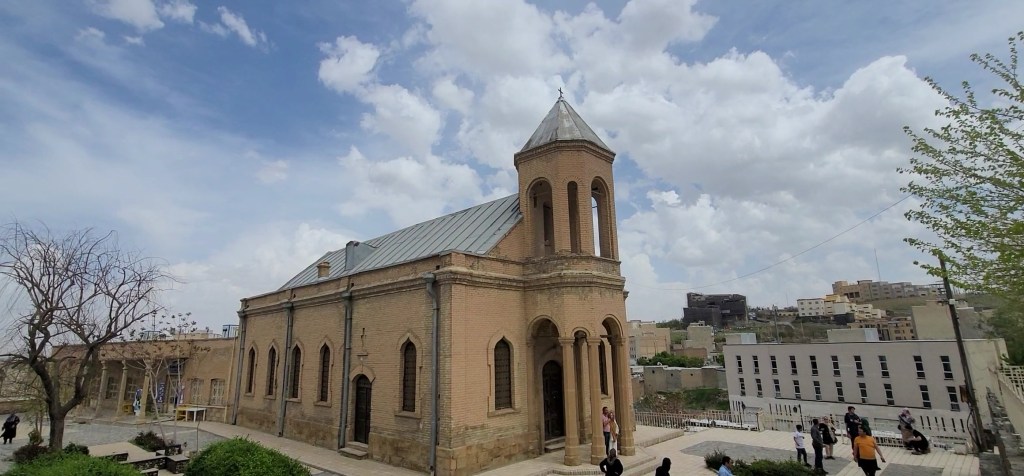
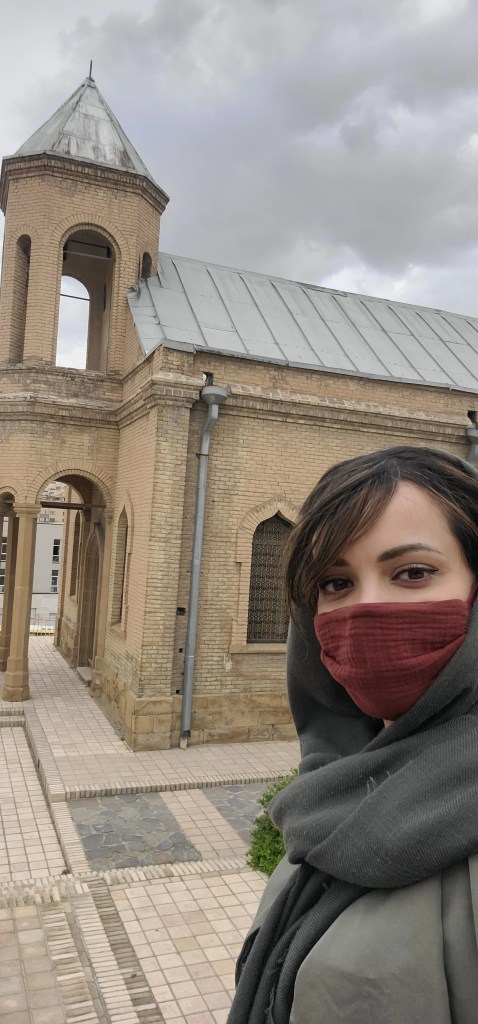
Image: Looking through the windows of Armenian Church of Surp Stepanos and Grigor Lusavorich, in Hamadan.
Leaving the Hostel
I had the pleasure to meet an interesting Iranian (Tehrani) traveller at the breakfast room. We were around the same age, and had similar interests in gaming and exploring. With a mix of Persian and English we conversed, but we quickly swapped to English because of how lacking my Persian is. Most of the tourists in Hamadan at this time were with families, but I suppose he took the holiday time to escape the busy Tehran metro area and somewhere more historic and quiet. I would too. After my friend arrived, I checked out of the hostel, and as I exit the gated doors, she splashed a jug of water right behind me. My friend explained that this is a common gesture of hoping that I, a traveller, will return to them again safely. A quick online search shows that this is common in the Balkans, the South Caucasus, Iran, and Turkey. I am going to miss them. 😦
Edit from the Future: Little did I know at that time, two things would happen. (1) I would return to the same hostel in Hamadan exactly one month later, and (2) another host would do the same gesture upon my departure from their hostel in Barzok in the Karkas Mountains.
Hegmataneh or Ekbatana?
This morning would be spent at the Tepe Ecbatana Archaeological Site, which also has a museum and Armenian church.
I have heard both terms used to refer to historic Hamadan, but mostly Hegmataneh. Ekbatana (or Agbatana) is just the Greek name. Hegmataneh is the Old Persian name that extends to the 7th century BCE, which is when the Medes chose the site for their capital, thus uniting all the scattered Median communities to a central location. As I mentioned in yesterday’s post, Hegmataneh would later on became the summer capital of the Achaemenid Empire, as the summer temperatures here are cool and pleasant, unlike the main capital in Parsa (Takht-e Jamshid/Persepolis).
We went into the complex with our tickets, I think it cost cost almost 1 Mil. Rials to enter (a little less than $2 USD). There was a gift store, outdoor kiosks, and a little walk to enter the archaeological grounds. There are many workshops and active excavation areas, and aside from some areas that were blocked off with metal scaffolding for work, we were able to still walk through the maze of the ruins. I was happy to see that there was a roof built over some of the exposed areas. It was so windy and dusty, since we were technically atop a hill with lots of earthy debris everywhere that my prescription contact lens flew out of my left eye. That has never happened to me before. Luckily I had a spare in my bag (as you should if you’re using daily lenses!).
Hamadan, Iran. Yes, I know I could have edited my footage better…
Combined footage from Farvardin/late April and Ordibehesht/late May. The snow is still there in May.
Hamadan Archaeological Museum:
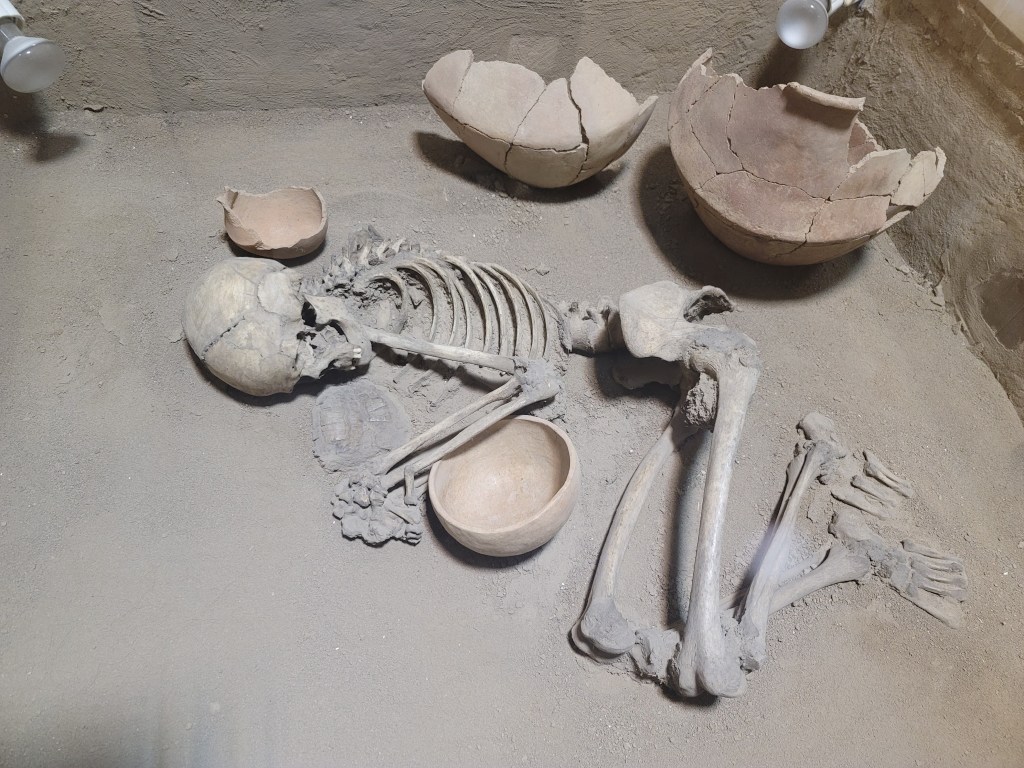
We went to the Hamadan Archaeological Museum within the same complex, and saw artefacts mostly from the Bronze Age to the Iron Age, and even a few items from the Qajar era, just 200 y.a (coins). Much of the history of Hamadan is ancient, though. There was a skeleton that stood out to me from the late Bronze Age/early Iron Age, which was found in a foetal position, hinting to the common burial practise of the time. The body was buried with a turtleshell, and I was not sure whether the body was buried with an actual turtle (dead or alive), or whether the carapace was part of the material culture, maybe used in the same way as earthenware bowls.
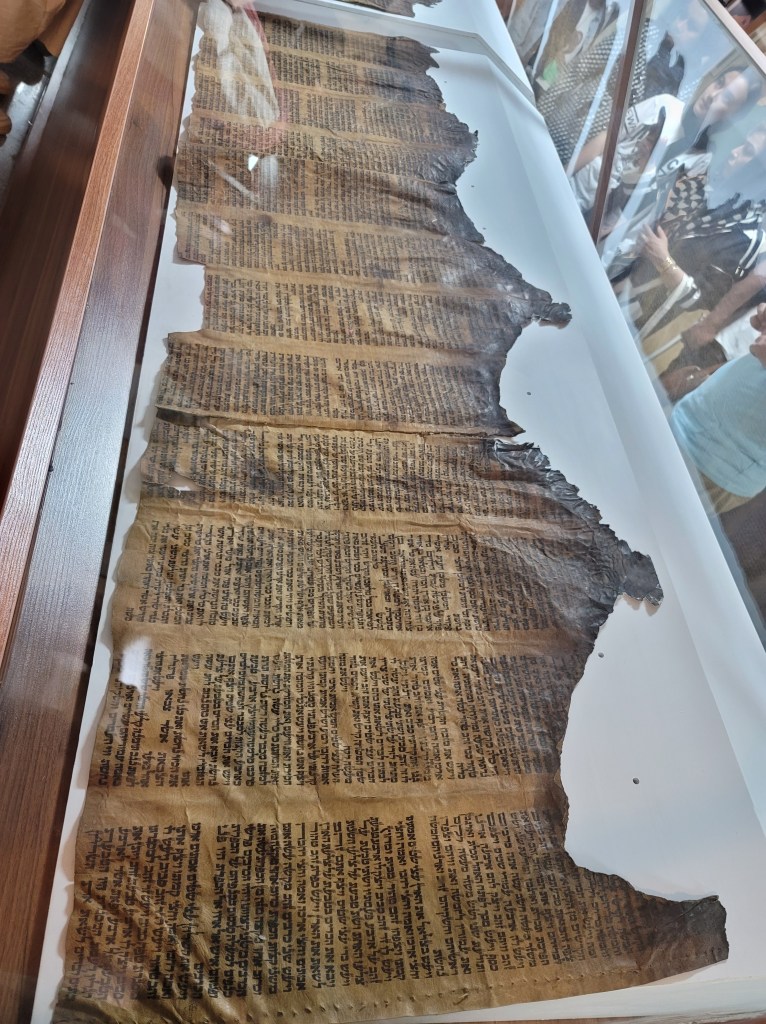
There in the centre of one of the rooms was a large glass encasement with numerous very large manuscripts made from leather, with Aramaic inscriptions. However, it was starting to get so crowded, and I could not find a description anywhere. If I had 2 hours of free time, I may have been able to read just one manuscript, and picked out just a few words that I remembered from a decade ago. I used to want to learn Biblical Hebrew thinking it would help me with Akkadian and enrich my Arabic, so I learned a little bit.
Church!
Built in 1676 CE, the Saint Stephen and Gregory the Illuminator Church is not as ancient as its surroundings. It’s Armenian name is Surp Stepanos and Grigor/Krikor Lusavorich. In the early part of the 1600s, Armenians from Jolfa/Jugha (Nakhichivan) resettled in Isfahan. The Armenian diaspora of Isfahan is said to have built this church in Hamadan for other Armenian communities of Safavid era Iran.
Edit from the Future: I focus on Armenian history in Iran a little more in my Isfahan posts. <LINK>
The Esther and Mordechai Mausoleum is here in Hamadan, but in a different part of the old city. It is a 20 minute walk or a few minute drive. However it was Saturday (Shabbat, a holy day for Jews), and the place was closed 😦
I pondered whether I should leave Hamadan today or if I could stay a little longer. But I found a bus going to Tehran 2 hours later, so I booked that ticket online. We attempted to get lunch somewhere elevated, but the restaurant was packed! Again, it was Eid holiday. So we roamed around until settling for an empty restaurant.
I asked the waiter, “Zereshk hasteed?”, Are you a barberry?, rather than “Zereshk dareed?” – Do you have barberry?
After an awkward moment passed, the answer was no. We ate there anyway. It was the first and last time I ordered Kabob Vaziri in Iran.
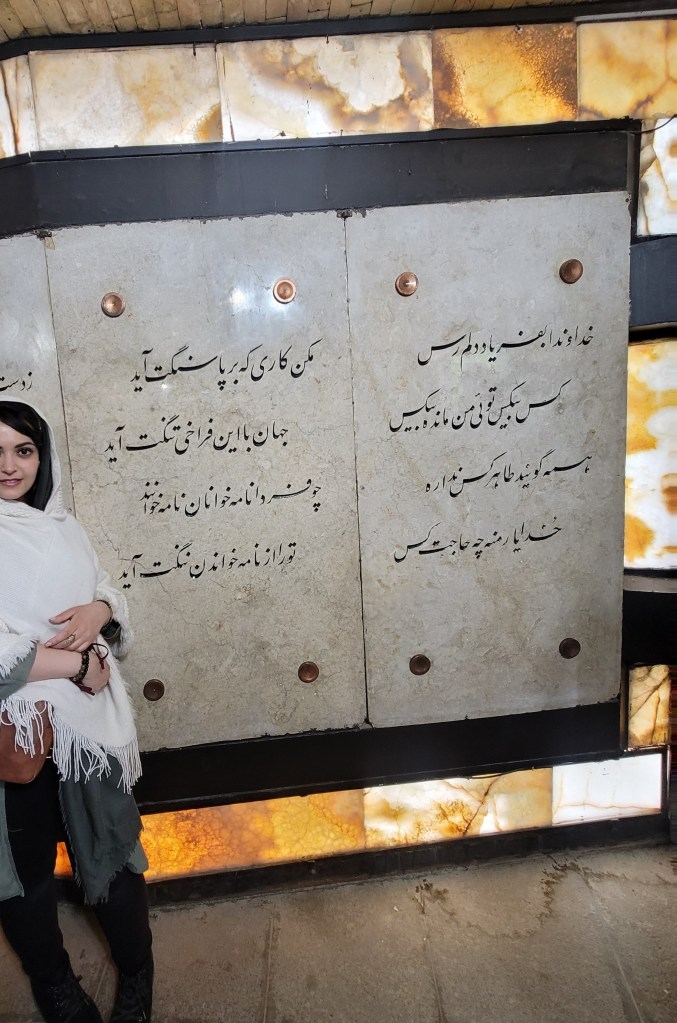
The last place I went was Baba Taher Mausoleum; a place I am sure I will enjoy more once I eventually master the Persian language. All I could understand was the type of poetry he wrote. Pahlaviyat in style, and mystical in its theme. He was an ascetic dervish who abstained from all materialistic matters, earning him the name, Oryan (the “bare”).
On the way out, we got hot tea from an outdoor kiosk at the park. The cold air cooled down the tea fast. The bus terminal was nearby, and I bid my friend farewell and got on my bus to Tehran and fighting the feeling of staying in Hamedan for one more day. A woman on the bus was sharing cookies with the passengers near her. They started talking together, but I could not understand.




 Iran, Az Cheshmanam